

Inverters with Charger 24V
Filter and sort

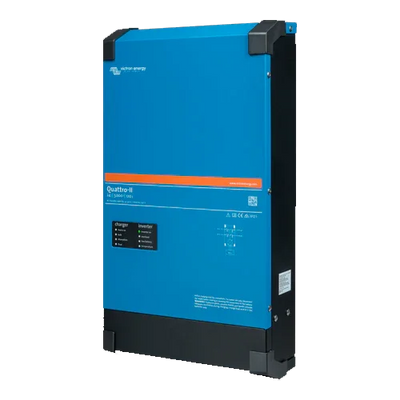
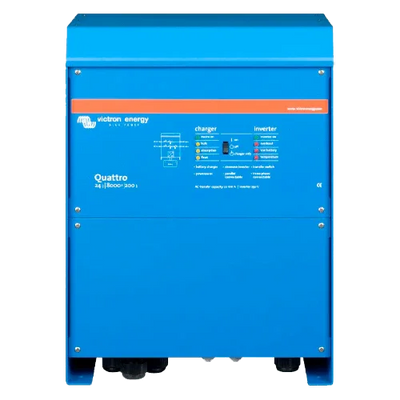

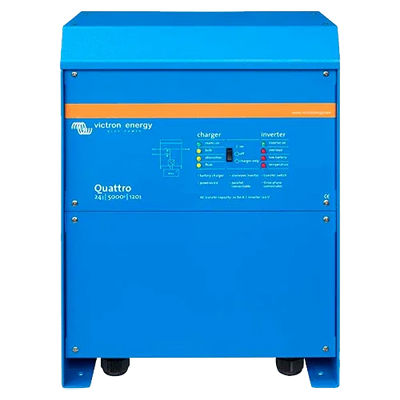

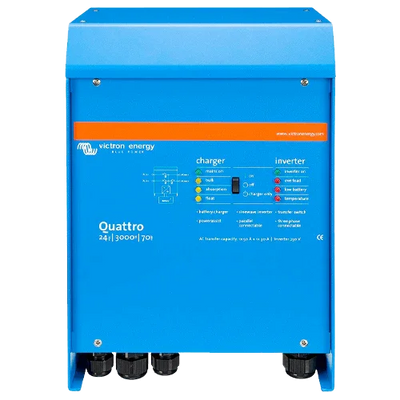
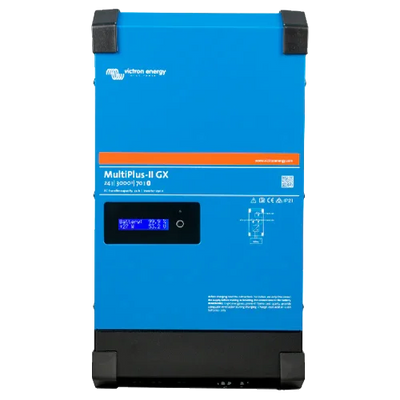


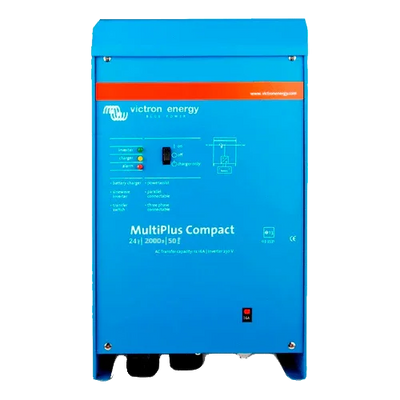
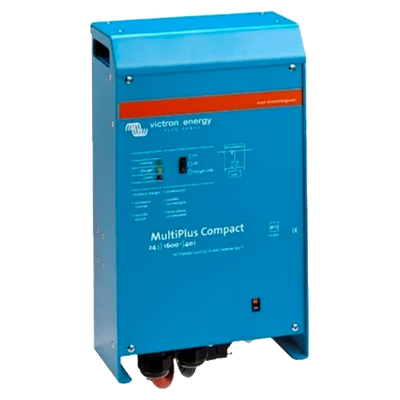

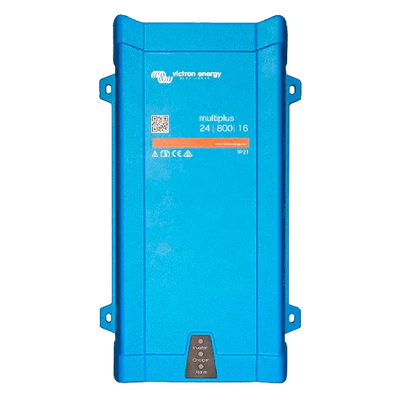
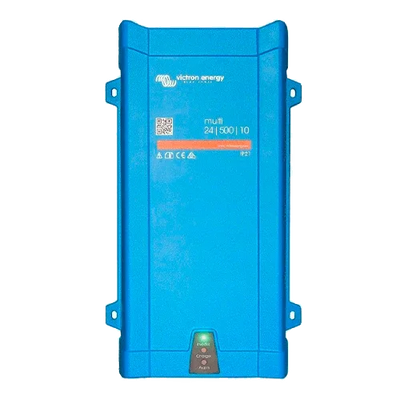


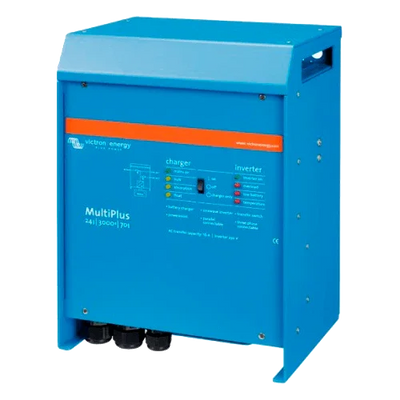


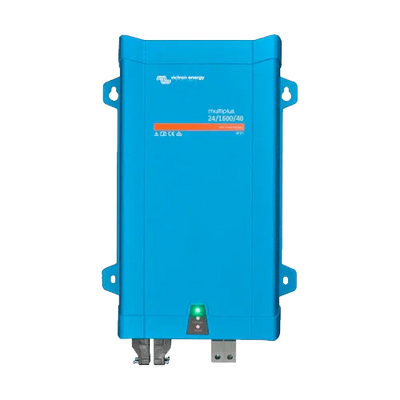
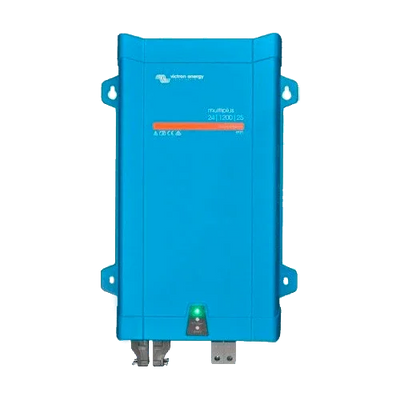
What does a 24V inverter with charger provide?
A 24V inverter with charger combines DC→AC conversion (230 V) and controlled recharging of the 24V battery bank from the grid or generator. It is a compact solution for off-grid homes, demanding caravans, and marine applications, where autonomy with simple and efficient backup is desired.
Advantages over 12V
- Lower current for the same power → less loss and more reasonable cable sizes.
- Higher continuous power without requiring oversized conductors.
- Cleaner installation of protections (fuses, disconnectors, busbars).
Common functions
- Multi-stage charger with profiles for AGM, GEL, OPzS and (depending on model) 24V lithium.
- Automatic switching and source priority (grid/generator vs battery) with reduced transfer times.
- Monitoring and communications (RS485/CAN, Wi-Fi/Bluetooth) depending on version.
- Protections: low/high DC voltage, overload, short circuit, temperature.
Typical applications
- Off-grid homes with medium consumption and generator backup.
- Caravans and campers with several receivers operating simultaneously.
- Recreational marine applications requiring charging at port or underway with generator.
Sizing keys
- Inverter power (kW) according to simultaneous loads and starting peaks.
- AC→DC charging current sufficient for the bank size (Ah) and expected recharge times.
- Battery compatibility (charging voltages and, for lithium, communications if applicable).
- Environment: ventilation, IP rating, and space for wiring and protections.
General specifications
| DC input | 24 V (AGM/GEL/OPzS or 24 V lithium) |
| AC output | 230 V single-phase |
| AC charger | Multi-stage; nominal current according to model (A) |
| Functions | Fast switching, priority, generator relay, monitoring |
| Applications | Residential/medium off-grid, advanced caravan, marine |
And if I want to connect panels directly?
Consider inverters with charger + MPPT, which integrate a photovoltaic controller to connect panels directly, simplifying the system and wiring.
In summary, a 24V inverter with charger offers an optimal balance between power, efficiency, and simplicity in medium-sized off-grid projects. If your demand increases, consider 48V; for very compact systems, 12V will remain practical.
Our Brands


