



Filter and sort















What is a smart battery charger and why should you care?
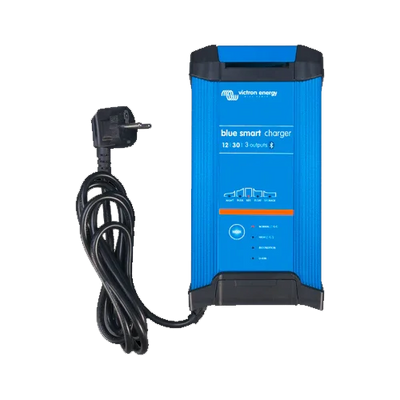
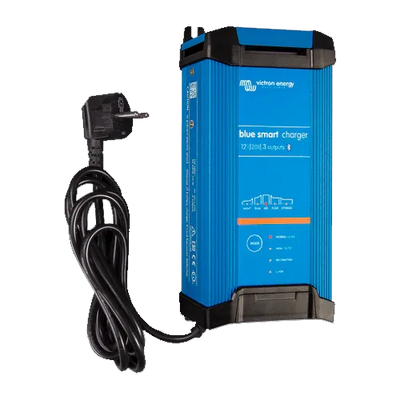
The chargers in the Battery Chargers collection are electronic devices that apply multi-stage charging algorithms to recover, charge, and maintain 12V, 24V, or 48V banks safely. Compared to a simple charger, a smart charger adjusts voltage and current according to the battery’s condition, reduces charging time, prevents sulfation, and improves service life, with specific management for lead-acid (AGM/GEL) and lithium (LiFePO₄).
Advantages
- Efficiency and protection: automated charging phases (bulk/absorption/float/storage) and thermal sensors.
- Connectivity: Bluetooth, VE.Smart, and VE.Direct to adjust parameters and monitor from the app.
- Versatility: models with 1 output, dual (1+1), or three outputs for independent banks.
- Robustness: IP22/IP43 options for indoor use and IP65/IP67 sealed for demanding environments.
- Industrial ranges: high currents, wide input, and CAN-bus communication for advanced integration.
Limitations
- You must match the nominal voltage (12/24/48V) of the charger with that of the bank.
- The charging current must be suitable for the manufacturer’s chemistry/capacity (C-rate).
- For lithium, activate the LiFePO₄ profile or use dedicated communication if the system supports it.
Applications
- Motorhomes, 4x4s, and marine (service bank and starter battery).
- Off-grid and backup solar systems (maintenance at port or base).
- Workshops and fleets (fast and safe charging with configurable profiles).
How to choose
- Voltage: 12V, 24V, or 48V according to your bank.
- Current (A): aim for 0.1–0.2 C for lead-acid and the value recommended by the BMS for lithium.
- Outputs: 1, (1+1), or 3 outputs if powering independent banks (service/starter).
- Environment: indoor (IP22/IP43) or outdoor/harsh environment (IP65/IP67 encapsulated).
- Control: Bluetooth/VE.Smart, VE.Direct, or CAN-bus depending on integration needs.
Typical specifications (indicative)
| Compatible voltages | 12V / 24V / 48V |
| Output current | From 4A to 100A depending on model |
| Number of outputs | 1, (1+1) auxiliary, or 3 full outputs |
| Environmental protection | IP22–IP43 (indoor) / IP65–IP67 (sealed) |
| Connectivity | Bluetooth, VE.Smart, VE.Direct, CAN-bus (depending on range) |
| Supported chemistries | Lead-acid (AGM/GEL) and LiFePO₄ |
Check each charger’s datasheet for absorption/float voltages, input power, and exact curves.
Quick comparisons by family
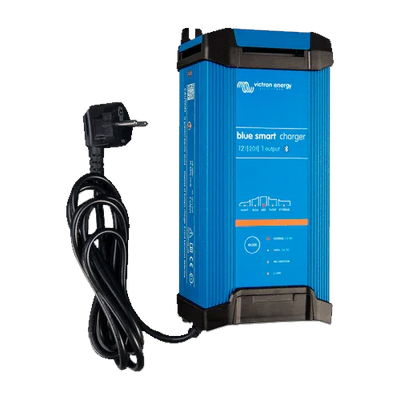
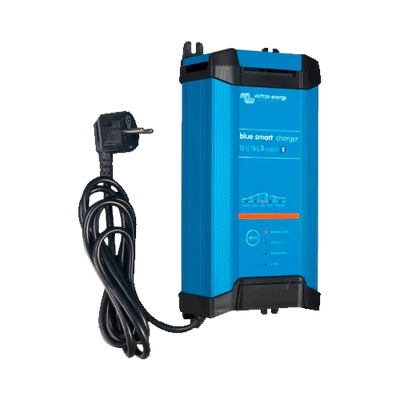
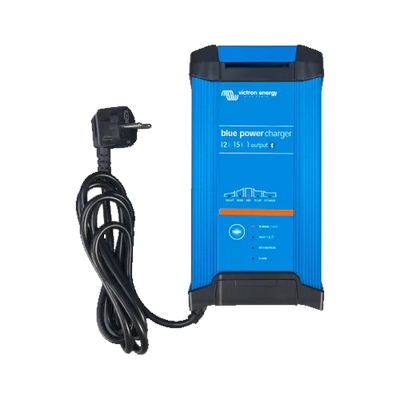
- Blue Smart IP22/IP43: indoor, Bluetooth, and VE.Smart network; ideal for workshops, campers, and cabinets.
- Blue Smart IP65/IP67: portable/sealed, robust cables; perfect for marine and outdoor use.
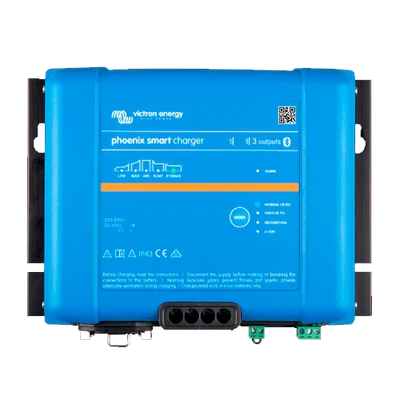
- Phoenix Smart IP43: fixed versions with (1+1) or 3 outputs, widely used in boats and caravans.
- Centaur: professional three-phase/single-phase range with 3 stages, stable and simple.
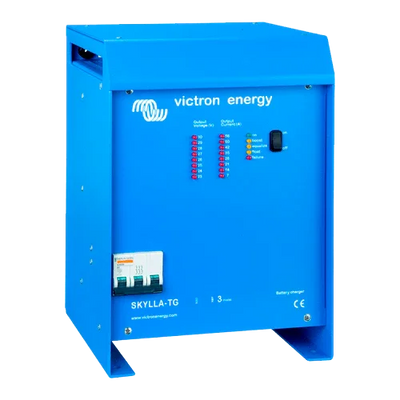
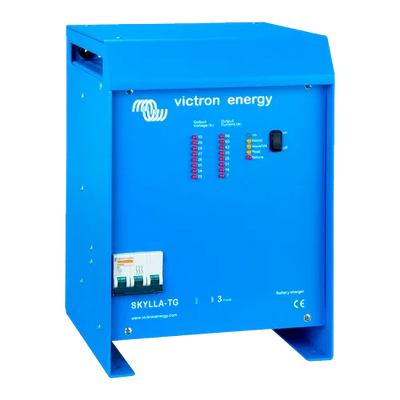
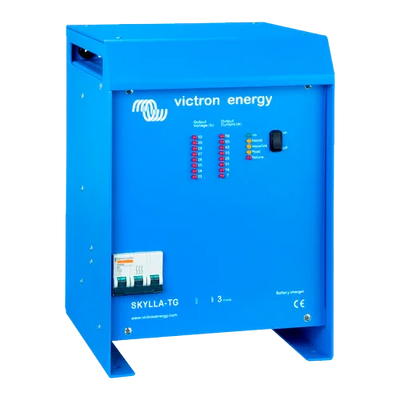
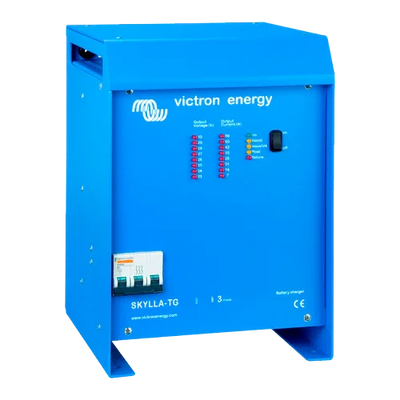
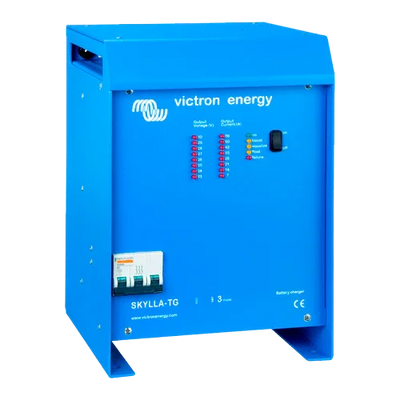
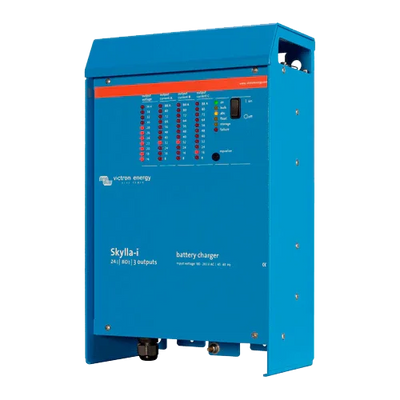
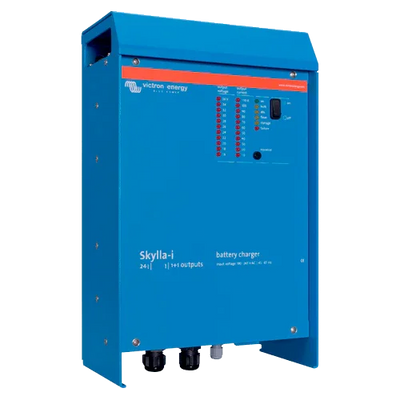
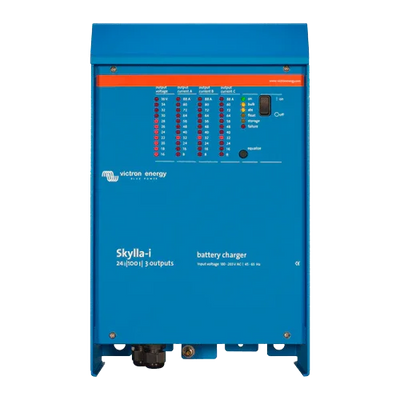
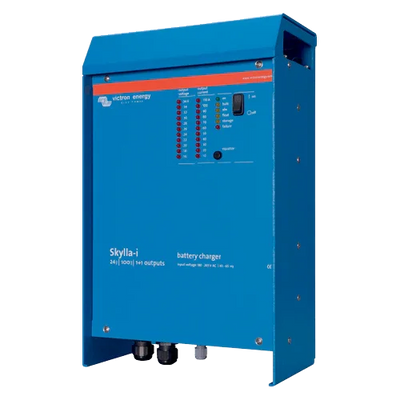
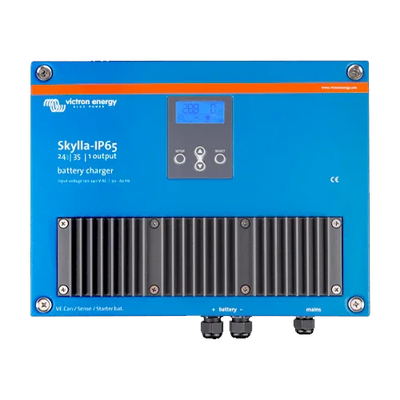
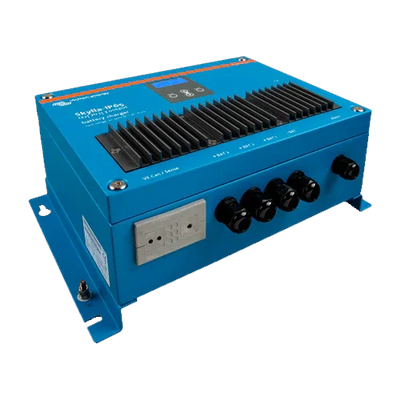
- Skylla-i / Skylla-TG: high power, (1+1) or 3 outputs, and advanced communication (incl. CAN-bus).
Best practices
- Set the correct profile (AGM/GEL/LFP) and absorption times according to the bank.
- Size cable cross-section and DC protections; place the charger with adequate ventilation.
- On boats/vehicles, separate banks with dedicated outputs or charge relays.
Related collections
Complete your system with a Battery Monitor to check voltages and currents, add Battery Accessories (fuses, fuse holders, cables), and combine with a DC-DC Converter if you need to adapt voltages between banks. If you are upgrading storage, visit Lithium Batteries.
With the Battery Chargers collection, you have reliable options to protect your investment and keep your systems ready, from small banks to high-power professional solutions.


