

Filter and sort











What are solar surface pumps and what are they used for?
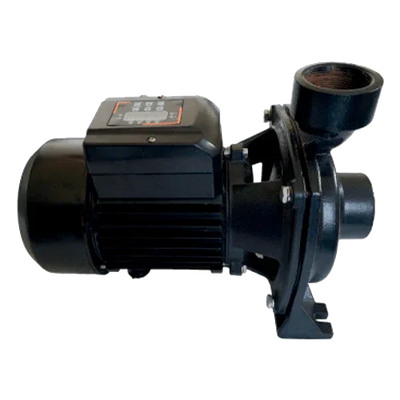
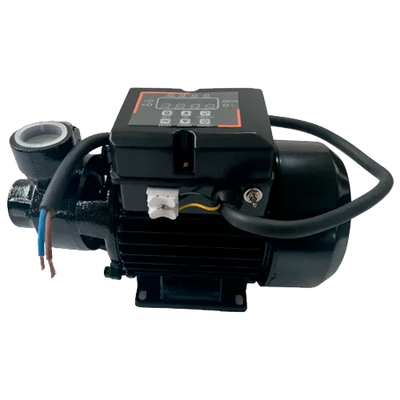
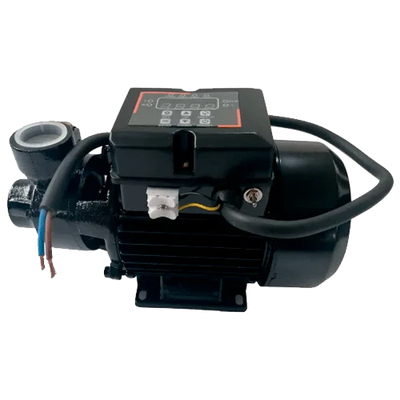
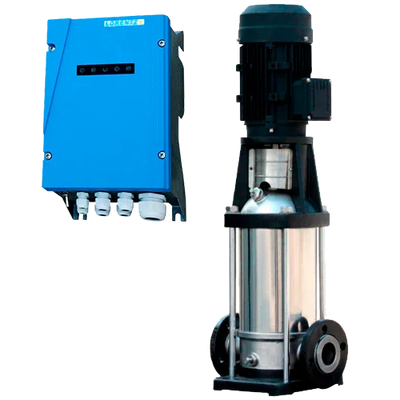
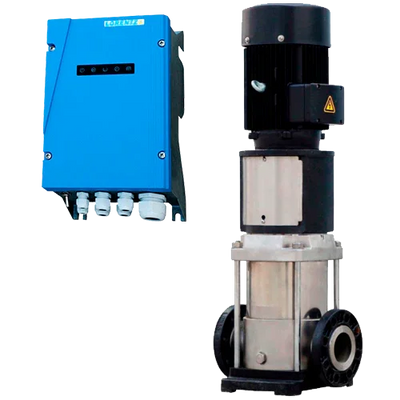
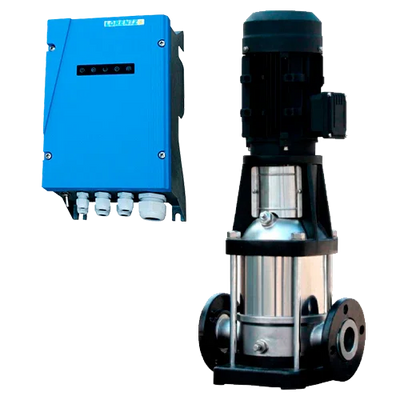
These are devices installed outside the water that draw from tanks, chambers, or channels and deliver flow and pressure to the discharge using solar energy. They allow for transfers, drip/sprinkler irrigation, and local pressurization without submerging the pump in the fluid. In this collection you will find Lorentz PS2 CS-F and PS2 BOOST (with integrated MPPT controller) and ZIRI series DCP/CPM/QB/SHF for 12/24/48 V DC. Note: Lorentz PU units (pump without controller) are managed as spare parts and not as products in this collection.
Advantages and limitations
- Efficiency and autonomy: off-grid operation with MPPT control that maximizes useful pumping hours.
- Easy maintenance: immediate access to the equipment (seals, filters, connections) and less lifting complexity compared to submersibles.
- Hydraulic versatility: ranges of high flow (CS-F, SHF) and BOOST versions for greater heights.
- Limitations: suction height is limited; it is advisable to install the pump as close as possible and below the water level and use a foot valve to facilitate priming. If the intake is very deep, opt for solar submersibles.
Common applications
- Transfers between tanks, ponds, and cisterns.
- Agricultural irrigation (drip/sprinkler) from tanks or surface watercourses.
- Local pressurization of auxiliary lines (wash stations, hoses, remote points).
- Supply to solar pool filters depending on hydraulic configuration.
Highlighted ranges in the catalog
- Lorentz PS2 CS-F: solar surface pumps with integrated MPPT controller (e.g., PS2-600 CS-F3-7 / CS-F4-3, PS2-1800 CS-F4-6, PS2-4000 CS-F8-8 / CS-F16-3 / CS-F32-20-2 / CS-F42-10-1).
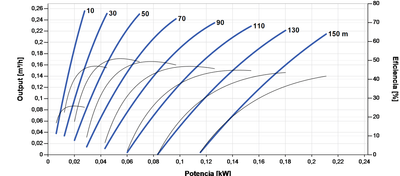
- Lorentz PS2 BOOST: high pressure for significant heights (e.g., PS2-150 BOOST-60 / BOOST-125 / BOOST-240 / BOOST-330).
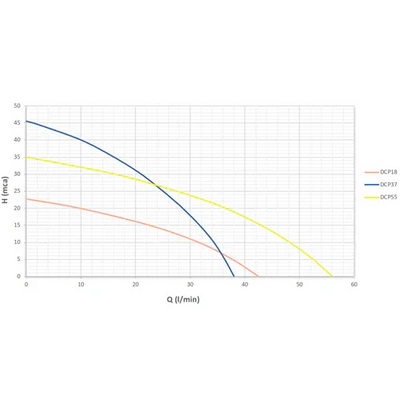
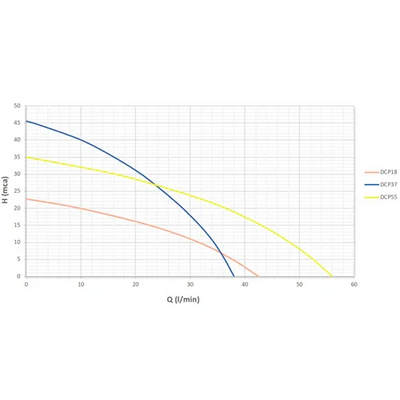
- ZIRI solar surface: DCP18-12V / DCP37-24V / DCP55-48V and CPM, QB, SHF ranges for different flow/head requirements.
How to choose your solar surface pump
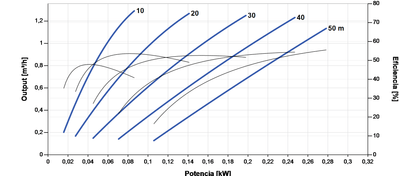
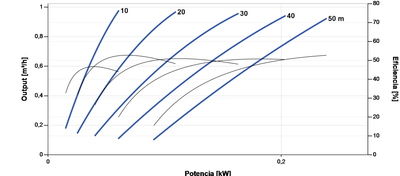
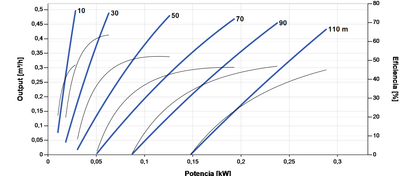
- Operating point: define flow (m³/h) and TDH (m). TDH = static head + friction losses (pipes, elbows, valves, filters). The selected model must intersect your point on the flow-head curve with margin.
- Hydraulics: centrifugal CS-F/CPM/QB for medium-high flows and low-medium heads; BOOST or SHF when head is prioritized with moderate flow.
- Power supply and electronics: in Lorentz PS2 the MPPT controller is included; in ZIRI DC ensure the voltage (12/24/48 V) and DC protections.
- Suction: suitable foot valve and strainer; minimize length and elbows in suction.
- Water quality: if there are sediments, include a filter to protect the impeller and mechanical seal.
Indicative technical specifications
| Typical flow | 0.26–57 m³/h (depending on CS-F/BOOST/CPM/QB/SHF series) |
| Total head | 10–150 m (up to 150 m in BOOST versions) |
| Power supply | Direct solar DC with MPPT (PS2 includes controller) | 12/24/48 V DC in ZIRI |
| Hydraulics | Centrifugal (high flow) | High pressure (BOOST) |
| Control | Integrated MPPT (PS2) / dedicated DC controller |
| Protections | Foot valve and strainer on suction, check valve on discharge, dry run, DC overvoltage |
Best installation practices
- Place the pump close to and below the water level to facilitate priming and avoid cavitation.
- Use generously sized pipes on suction and avoid unnecessary elbows; check for leaks.
- For solar, adjust the PV array (voltage/current) to the controller's ranges; respect maximum cable lengths.
- Enable dry run shutdown using probes or differential pressure switch; install check valve on discharge.
- Maintenance plan: clean filters and strainers, check seals, and tighten terminals/connectors.
Comparisons and related accessories
If the water source is deep, consider solar submersible pumps. If you need backup with grid or generator, see hybrid surface pumps; for pure AC, AC surface pumps. To deliver water from the tank to consumption, add a pressure pump. Complete the installation with accessories (foot valve, filters, pressure switches/press-control, DC protections) and consult spare parts for components and standalone PU units.


