

Monocrystalline Solar Panels
Filter and sort
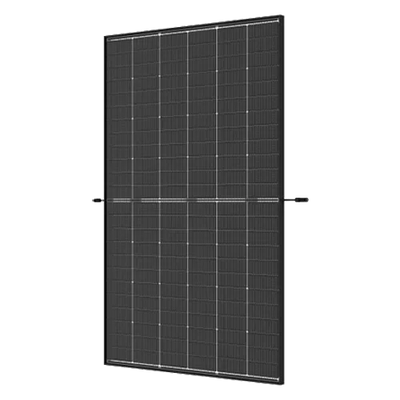



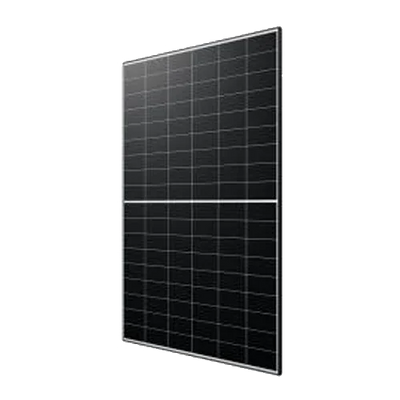
What is a monocrystalline solar panel?
A monocrystalline panel is a photovoltaic module made from silicon cells of a single crystal, which gives it high efficiency, uniform aesthetics, and a better power-to-area ratio compared to other technologies. It is the preferred option for rooftops with limited space and projects seeking to maximize kWh per m².
Advantages
- Typically higher efficiencies that allow more Wp in less area.
- Better thermal performance (lower power coefficient), useful in summer.
- Wide range of power ratings and formats for residential, commercial, and industrial use.
- Long-term product and linear power warranties.
Limitations
- Actual performance depends on orientation, shading, and system losses.
- Require correct string sizing (Voc/Vmp/Isc) according to the inverter/MPPT.
- More rigidity in color/aesthetics: all-black panels absorb more heat if ventilation is poor.
Applications
- Residential self-consumption with limited roof space.
- Commercial/industrial where maximum power density is sought.
- Ground installations prioritizing module efficiency.
How to choose your monocrystalline panel
- Power and dimensions: adjust the format to the available space and structure.
- Electrical parameters: check Voc, Vmp, Isc, and Imp with the MPPT window and inverter limits.
- Thermal coefficients: prioritize lower %/°C for hot climates.
- Warranties and certifications: product and linear power; IEC 61215/61730, mechanical/PID resistance.
- Volume: for large projects, consider packs and pallets.
Indicative specifications
| Technology | Monocrystalline (PERC / N-Type depending on model) |
| Power range | ~350–720 Wp (depending on format) |
| Module efficiency | ~20–23% (higher for premium models) |
| Power coefficient | −0.30 to −0.35 %/°C approx. |
| Voc / Isc | See datasheet; size according to minimum temperature and MPPT limits |
| Warranties | Product and linear power (see manufacturer conditions) |
Best practices
- Calculate strings by Voc at minimum temperature and by Vmp in operation; leave margin for the MPPT.
- Avoid partial shading; if present, use optimizers on affected modules.
- Use certified structures and correct tightening torque; ensure grounding and SPD on DC/AC when applicable.
- Maintain spacing for rear ventilation and better thermal performance.
Comparisons and related collections
- Bifacial: higher production if there is albedo (light gravel, white ground) and sufficient height.
- Packs/Pallets: optimize logistics and cost per W for large orders.
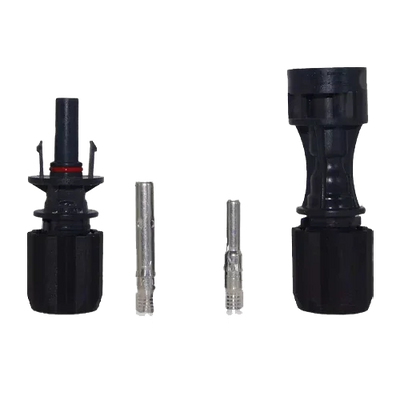
- Accessories: MC4 connectors, cabling, and compatible fixings.
To complete your system, combine monocrystalline panels with optimizers in shaded areas and add the appropriate accessories for a safe and long-lasting installation.
Our Brands


