

Filter and sort





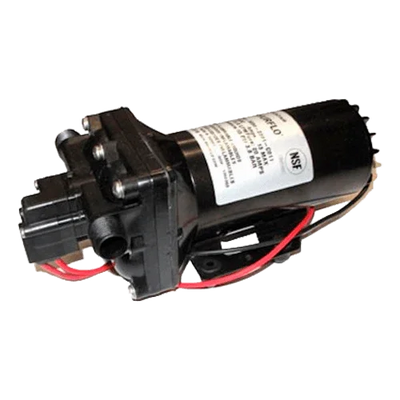

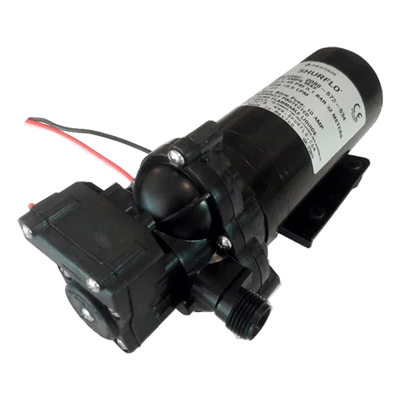
What are 24V pressure pumps and what are they used for?
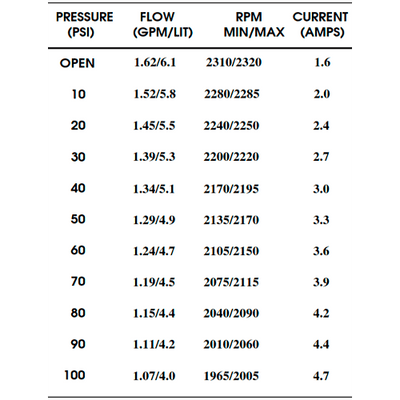
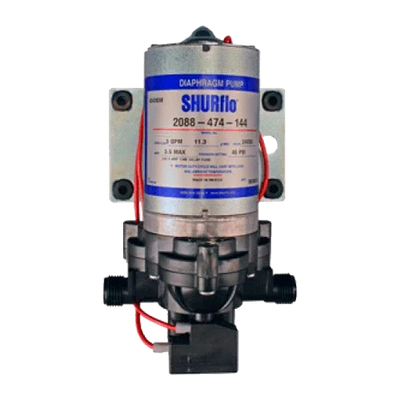
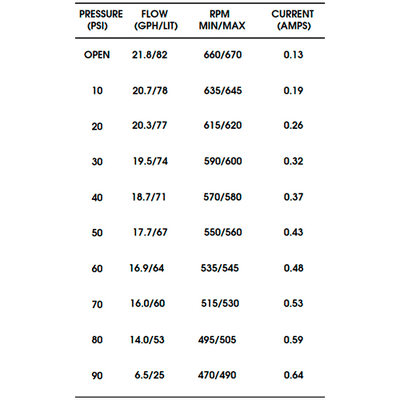
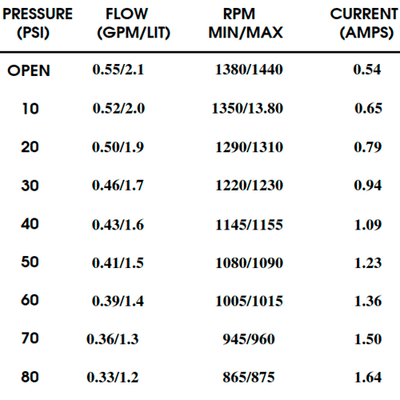
24 V pressure pumps are compact devices—usually diaphragm type—designed to maintain constant pressure in the water network using 24 V battery banks. Compared to 12 V, they operate at lower current for the same power, which reduces losses in the wiring and allows for longer lines, a key factor in solar systems for residential, marine, and camper applications. In this collection you will find models with flow rates from 2–19 l/min, pressures from 30–100 PSI, integrated pressure switch, and self-priming for convenient and efficient use.
Advantages and limitations
- Electrical efficiency: lower current than at 12 V, less voltage drop, and better use of existing cable.
- Simple installation: compact format, self-priming, and accessible maintenance.
- Comfort: compatible with expansion tank to reduce cycles, noise, and water hammer.
- Limitations: do not replace a submersible pump for high lift or a pool filter; their function is to pressurize the internal network.
Applications
- Isolated and off-grid homes: supply for taps/showers with intermediate tank and compatible water heater.
- Marine and camper: pressurized water with moderate consumption and low noise level.
- Light irrigation, pressurized transfers in nearby tanks, and remote points.
How to choose
- Flow rate (l/min): 6–10 l/min for 1–2 simultaneous points; 12–19 l/min for 2–3 points.
- Pressure (PSI/bar): 30–60 PSI covers most uses; up to 100 PSI if your installation requires it.
- Usage profile: intermittent (typical for taps/showers). Add an expansion tank (20–50 L) for fewer starts and longer pressure switch life.
- Electrical installation: cable section according to current and length; suitable DC fuse or circuit breaker.
- Water quality: install a filter on suction (≈50 µm) to protect the diaphragm and valves.
Indicative technical specifications
| Nominal voltage | 24 V DC |
| Typical flow rate | 2–19 l/min |
| Operating pressure | 30–100 PSI (≈2–6.9 bar) |
| Control | Integrated pressure switch/press-control |
| Function | Self-priming (depending on suction height) |
| Accessories | Expansion tank 20–50 L, 50 µm filter, check valve |
Best practices
- Place the pump near the tank and, if possible, below the water level to facilitate priming.
- Use flexible hoses and anti-vibration mounts to reduce noise.
- Bleed the line at first start-up and periodically check connections and diaphragm condition.
- Adjust the cut-off pressure (if adjustable) according to the internal network and water heater.
Comparisons and related accessories
If your installation is very compact or has short wiring, you may consider 12V Pressure Pumps. With a 230 V grid/inverter, check AC Pressure Pumps. For photovoltaic integration with batteries, also see Solar Pressure Pumps. Complete the installation with accessories (Ibaiondo expansion tanks, filters, protections) and keep spare parts available. Return to the main collection Pressure Pumps to see all options.


