

Polycrystalline Solar Panels
What is a polycrystalline solar panel?
A polycrystalline panel is made up of silicon cells with multiple crystals. It is characterized by its robustness, availability in 12V/24V nominal voltages, and compact formats, making it perfect for small off-grid installations, vehicles, and applications where space and battery bank voltage determine the design.
Advantages
- Excellent cost per W ratio for small and medium-scale projects.
- Wide availability in small sizes for integration in caravans, boats, and cabins.
- Direct compatibility with PWM and MPPT controllers at 12/24V.
- Durable construction: aluminum frame, tempered glass, and sealed junction box.
Limitations
- Lower efficiency per m² compared to monocrystalline panels.
- On roofs with limited space, it may be advisable to switch to mono or bifacial for more Wp per m².
Recommended applications
- Isolated 12V/24V systems: lighting, small pumping, cameras, IoT/telecom.
- Motorhomes and marine: charging service batteries with PWM/MPPT controller.
- Signaling and beacons, site cabins, and shelters.
How to choose your polycrystalline panel
- Nominal voltage: 12V (Vmp≈18V) or 24V (Vmp≈36V) according to your controller and bank.
- Power and dimensions: adjust the size to the available space and structure.
- Electrical parameters: check Voc, Vmp, Isc, and Imp to ensure the MPPT window and the controller's current limit.
- Environment: choose the protection grade of the frame/junction box for marine or dusty environments.
Typical specifications (indicative)
| Technology | Polycrystalline |
| Nominal voltage | 12V or 24V (depending on cell configuration) |
| Power range | ~20–350 Wp (compact and medium formats) |
| Voc / Vmp | ~22/18V (12V) · ~44/36V (24V) — see each model's datasheet |
| Isc / Imp | According to power; check with the controller and wiring |
| Construction | Tempered glass, anodized aluminum frame, IP65/67 box |
| Warranties | Product and linear power (check with manufacturer) |
Exact values vary by model; size strings by Voc at minimum temperature and check controller limits.
Best practices
- Use MPPT controllers to improve performance, especially with long wiring or low temperatures.
- Protect the PV circuit with fuses/fuse holders and DC SPD where appropriate.
- Ensure rear ventilation, certified mounting, and correct torque on clamps.
- If there are frequent partial shadows, consider optimizers on the affected modules.
Comparisons and related collections
- Monocrystalline: higher efficiency per m² for limited roofs.
- Bifacial: rear gain with albedo in ground installations.
- Packs and Pallets: better logistics and cost per W for bulk purchases.
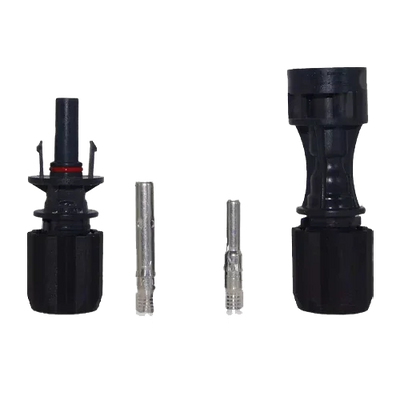
- Solar Panel Accessories: MC4 connectors, solar cable, and clamps.
Polycrystalline solar panels are the practical and robust option for 12/24V systems and compact formats, with an optimal balance between price, durability, and ease of integration.
Our Brands


